The management of sedation, analgesia, and neuromuscular blockade (NMB) in mechanically ventilated intensive care unit (ICU) patients represents a critical balance between patient safety, comfort, and lung protection. Historically, prolonged deep sedation and continuous chemical paralysis were standard practice for invasive ventilation. Modern neurocritical and pulmonary intensive care medicine has demonstrated that indiscriminate oversedation and prolonged neuromuscular blockade are directly linked to ventilator-induced lung injury (VILI), patient-ventilator dyssynchrony, critical illness neuromuscular weakness (CINM/CIPNM), delirium, extended mechanical ventilation duration, and heightened post-ICU neuropsychiatric sequelae.
Contemporary critical care paradigms mandate an Analgesia-First (Analgo-sedation) framework, dynamic light-sedation titration guided by validated psychometric scales (such as the Richmond Agitation-Sedation Scale [RASS] and CAM-ICU), and restrictive, targeted application of neuromuscular blocking agents (NMBAs) reserved strictly for severe acute respiratory distress syndrome (ARDS) with refractory hypoxemia ($P_aO_2/F_iO_2 < 150\text{ mmHg}$), life-threatening patient-ventilator dyssynchrony, elevated transpulmonary pressures, or prone positioning.
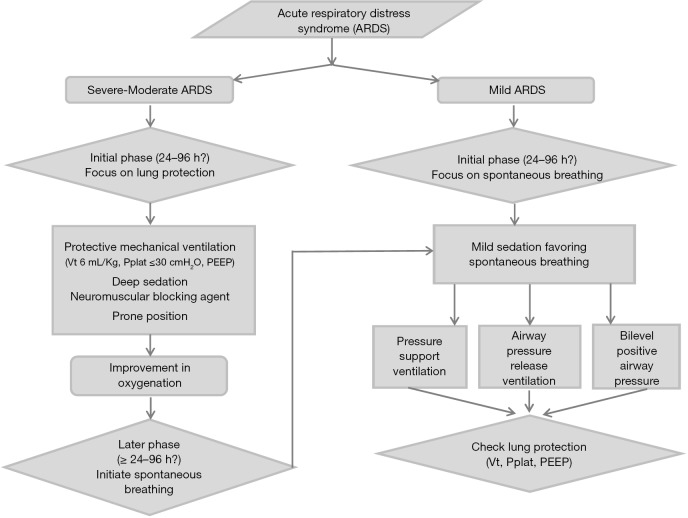 Figure 1: Evidence-based clinical algorithm for sedation and neuromuscular blockade titration in acute respiratory distress syndrome (ARDS). In moderate-to-severe ARDS ($P_aO_2/F_iO_2 < 150\text{ mmHg}$), the initial phase ($\le 48\text{ hours}$) prioritizes lung protection using deep sedation (target RASS $-4$ to $-5$), early prone positioning, and continuous neuromuscular blockade (cisatracurium infusion) to abolish patient-ventilator dyssynchrony, minimize transpulmonary pressure swings, and prevent patient-self-inflicted lung injury (P-SILI). Upon stabilization and improvement in oxygenation, therapy transitions to a spontaneous breathing strategy, where NMBAs are promptly discontinued and sedation is de-escalated to light targets (RASS $0$ to $-1$) to facilitate spontaneous breathing trials (SBTs), diaphragmatic preservation, and early liberation.
Analgesia-First (Analgo-Sedation) Paradigm
Pain in mechanically ventilated patients stems from the endotracheal tube, positive-pressure airway distension, invasive lines, surgical wounds, routine nursing care (repositioning, endotracheal suctioning), and pre-existing medical pathologies. Uncontrolled nociception activates the sympathetic neuroendocrine stress axis, triggering tachycardia, hypertension, myocardial oxygen demand elevation, catabolism, tachypnea, patient-ventilator fighting (breath-stacking, double triggering), and severe agitation.
The Analgo-Sedation Philosophy (ePAD Guidelines)
The Society of Critical Care Medicine (SCCM) ePAD / PADIS clinical practice guidelines emphasize Analgesia-First (analgo-sedation):
- Pain Assessment Before Sedation: Prioritize objective evaluation of pain using validated behavioral pain scoring tools before administering sedative or hypnotic agents.
- Treat Pain Directly: Analgesics alone (typically parenteral opioids or multimodal adjuncts) frequently achieve adequate patient tranquility and ventilator synchrony, obviating or drastically curtailing the requirement for hypnotic sedatives.
- Minimize Sedative Exposure: Hypnotics and GABA-ergic sedatives (such as benzodiazepines) possess no analgesic properties; administering them to a patient in distress due to untreated pain induces agitated deliriogenic states ("paradoxical excitation") and respiratory depression without relieving nociception.
+-------------------------------------------------------------------------------+
|                      ANALGO-SEDATION TITRATION CASCADE                        |
+-------------------------------------------------------------------------------+
                                        |
                   [ Evaluate Pain: CPOT >= 3 or BPS >= 6 ]
                                        |
                 +----------------------+----------------------+
                 |                                             |
     [ Intermittent Boluses ]                        [ Continuous Infusion ]
  - Fentanyl 25-50 mcg IV Q1-2h              - Fentanyl 25-100 mcg/h
  - Hydromorphone 0.2-0.5 mg IV Q2-3h        - Hydromorphone 0.5-2.0 mg/h
  - Morphine 2-4 mg IV Q2-4h                 - Remifentanil 0.05-0.2 mcg/kg/min
                 |                                             |
                 +----------------------+----------------------+
                                        |
                   [ Reassess Pain Score (CPOT < 3 / BPS < 6) ]
                                        |
                 +----------------------+----------------------+
                 |                                             |
     [ Patient Calm / Synchronous ]            [ Agitation / Dyssynchrony Persists ]
          (RASS 0 to -1)                                       |
                 |                              [ Assess Sedation Target: RASS ]
          Maintain Plan                                        |
                                        +----------------------+----------------------+
                                        |                                             |
                               [ Light Target: RASS 0/-1 ]                  [ Deep Target: RASS -4/-5 ]
                               - Dexmedetomidine 0.2-1.4 mcg/kg/h           - Propofol 5-50 mcg/kg/min
                               - Low-dose Propofol 5-20 mcg/kg/min          - Midazolam (if hemodynamically unstable)
                                        |                                             |
                            [ Daily SAT / SBT Protocol ]                 [ Reassess Paralysis / Prone ]
Parenteral Opioids: Pharmacokinetics and Clinical Selection
| Agent | Onset / Peak | Context-Sensitive Half-Life ($t_{1/2}$) | Metabolic Pathway & Organ Clearance | Active / Toxic Metabolites | Key Clinical Characteristics & ICU Pearls |
|---|---|---|---|---|---|
| Fentanyl | 1–2 min / 3–5 min | Prolonged significantly after $> 48\text{ h}$ (lipophilic tissue accumulation) | Hepatic CYP3A4 oxidation | Inactive (norfentanyl) | High lipophilicity; rapid initial redistribution; safe in renal dysfunction; minimal histamine release; risk of chest wall rigidity with rapid high-dose boluses ($> 5\text{ mcg/kg}$). |
| Hydromorphone | 5–10 min / 15–20 min | 2–3 hours (minimal accumulation) | Hepatic glucuronidation (UGT2B7) | Hydromorphone-3-glucuronide (H3G; neurotoxic, can accumulate in severe renal failure) | 5–7× more potent than morphine; less histamine release and vasodilation than morphine; reliable parenteral opioid in renal impairment with close neuro-monitoring. |
| Morphine | 10–15 min / 30–60 min | 2–4 hours | Hepatic glucuronidation (UGT2B7) | Morphine-6-glucuronide (M6G; potent analgesic) & Morphine-3-glucuronide (M3G; neurotoxic/hyperalgesia) | Triggers systemic histamine release causing hypotension and bronchospasm; active metabolites accumulate severely in renal failure ($GFR < 30\text{ mL/min}$), precipitating prolonged coma and respiratory arrest. |
| Remifentanil | 1–2 min / 2–3 min | 3–5 minutes (independent of infusion duration) | Rapid hydrolysis by non-specific blood and tissue esterases | Inactive (remifentanil acid) | Organ-independent clearance; ideal for rapid neuro-assessments and predictable wake-up; high risk of post-cessation acute opioid tolerance and hyperalgesia; requires bridge analgesia prior to discontinuation. |
Intermittent Bolus vs Continuous Infusion Protocols
- Intermittent Boluses: Preferred for patients with mild-to-moderate, intermittent pain. Prevents progressive lipophilic tissue saturation, reduces total cumulative opioid consumption by $30\text{--}50\%$, preserves physiological gastrointestinal motility, and shortens time to spontaneous breathing trials.
- Continuous Infusions: Indicated for severe baseline continuous pain (e.g., extensive thoracic trauma, open abdominal wounds, acute necrotizing pancreatitis) or patients requiring deep sedation where spontaneous breathing efforts create unsafe transpulmonary shear stresses. Must be paired with daily nursing-driven titration and spontaneous awakening trials.
Sedative Pharmacology and Selection in the ICU
The selection of sedative agents must align directly with the clinical objective: light sedation for the majority of mechanically ventilated patients versus deep sedation for specific neuroprotective, prone-positioning, or neuromuscular blockade indications.
       SEDATIVE SPECTRUM: DEPTH vs RESPIRATORY DRIVE PRESERVATION

  [ Light Sedation / Arousable ]                     [ Deep Sedation / Hypnotic Coma ]
   (RASS: 0 to -1 | Interactive)                     (RASS: -4 to -5 | Ventilator Control)
  <---------------------------------------------------------------------------------->
       DEXMEDETOMIDINE                                    PROPOFOL / MIDAZOLAM
  - Preserves spontaneous drive                      - Dose-dependent respiratory depression
  - Non-GABA-ergic (alpha-2 agonist)                 - GABA-A receptor potentiation
  - Facilitates early weaning/SBT                    - Obliterates spontaneous patient drive
  - Significant delirium reduction                   - High risk of accumulation / PRIS
1. Dexmedetomidine
- Mechanism of Action: Highly selective central $\alpha_2$-adrenergic agonist ($\alpha_2:\alpha_1$ selectivity ratio $1620:1$). Acts presynaptically within the locus coeruleus of the pons, inhibiting norepinephrine release and activating endogenous non-REM sleep pathways (producing "cooperative sedation").
- Dosing & Titration: Continuous IV infusion at $0.2\text{--}1.4\text{ mcg/kg/h}$. Loading boluses ($1.0\text{ mcg/kg}$ over $10\text{ min}$) are strictly avoided in the ICU due to severe biphasic hemodynamic instability (initial peripheral $\alpha_{2b}$ vasoconstriction with hypertension, followed by central sympatholysis causing severe bradycardia and hypotension).
- ICU Advantages:
- Respiratory Drive Preservation: Does not suppress spontaneous ventilatory drive or blunten hypercapnic/hypoxic ventilatory responses; patients maintain spontaneous tidal volume generation and airway reflexes.
- Delirium Sparing: Significantly reduces the duration and incidence of ICU delirium compared to benzodiazepines and propofol (SEDCOM, MENDS trials).
- Facilitates Extubation: Can be safely maintained through endotracheal extubation and continued in non-intubated patients during post-extubation non-invasive ventilation (NIV) or high-flow nasal cannula (HFNC).
- Adverse Effects: Sinus bradycardia, sinus arrest, heart block, and peripheral vasodilation-induced hypotension. Sudden cessation after prolonged infusions ($> 72\text{--}96\text{ h}$) can precipitate rebound sympathetic tachycardia and hypertension.
2. Propofol
- Mechanism of Action: Alkylphenol derivative that potentiates central inhibitory neurotransmission via $\text{GABA}_A$ receptor activation, coupled with direct inhibition of NMDA receptors and sodium channel modulation.
- Pharmacokinetics: Onset within $30\text{--}60\text{ seconds}$; rapid clinical emergence ($10\text{--}15\text{ minutes}$) following short-term infusions due to extensive redistribution into peripheral adipose compartments.
- Dosing: Titrated from $5\text{ to }50\text{ mcg/kg/min}$ ($0.3\text{ to }3.0\text{ mg/kg/h}$). Doses exceeding $67\text{--}83\text{ mcg/kg/min}$ ($> 4\text{--}5\text{ mg/kg/h}$) for durations $> 48\text{ hours}$ must be strictly avoided.
- ICU Advantages: Rapid on/off kinetics permit clean daily spontaneous awakening trials (SATs); suppresses elevated intracranial pressure (decreases cerebral metabolic rate $\text{CMRO}_2$, cerebral blood flow, and ICP); potent anticonvulsant properties.
- Propofol-Related Infusion Syndrome (PRIS):
- Pathophysiology: Uncoupling of mitochondrial oxidative phosphorylation and inhibition of cellular free-fatty acid mitochondrial entry, causing profound cellular bioenergetic crisis, metabolic lactic acidosis, and widespread rhabdomyolysis.
- Clinical Triad / Features: Refractory severe metabolic acidosis with hyperlactatemia, hyperkalemia, acute rhabdomyolysis (surging creatine kinase), hypertriglyceridemia, hepatomegaly/steatosis, acute renal failure, and refractory cardiovascular collapse (Brugada-like coved ST elevation, malignant ventricular arrhythmias, cardiogenic shock).
- Prevention: Limit infusion rates strictly to $< 4\text{--}5\text{ mg/kg/h}$ ($< 67\text{--}83\text{ mcg/kg/min}$) and duration to $< 48\text{ hours}$; monitor serum triglycerides, lactate, and CK every $24\text{--}48\text{ hours}$. Remember that $1\text{ mL}$ of $1\%$ propofol lipid emulsion provides $1.1\text{ kcal}$ of dietary lipid (must be deducted from enteral nutrition calories to prevent severe pancreatitis and hypertriglyceridemia).
3. Midazolam
- Mechanism of Action: Water-soluble imidazole-ring benzodiazepine that crosses the blood-brain barrier rapidly following injection, binding to the $\text{GABA}_A$ receptor complex and augmenting chloride conductance.
- Metabolism & Accumulation: Extensively oxidized by hepatic CYP3A4 to 1-hydroxymidazolam (an active metabolite with $50\%$ parent activity) which undergoes renal clearance. In critically ill patients with septic shock, hepatic congestion, or acute kidney injury ($GFR < 50\text{ mL/min}$), parent midazolam and 1-hydroxymidazolam glucuronides accumulate profoundly in peripheral fat and muscle stores, prolonging terminal elimination half-life from $2\text{--}4\text{ hours}$ to several days.
- Clinical Role: Associated with an elevated risk of ICU delirium, prolonged mechanical ventilation, and delayed weaning (MENDS, PRODEX, MIDEX trials). Current SCCM guidelines strongly recommend non-benzodiazepine sedatives (propofol or dexmedetomidine) over benzodiazepine infusions. Midazolam is restricted to:
- Intractable status epilepticus.
- Severe alcohol withdrawal syndrome / delirium tremens.
- Persistent hemodynamic instability or refractory shock where propofol-induced vasodilation/myocardial depression is prohibitive.
- Deep neuromuscular blockade when propofol is contraindicated.
4. Ketamine
- Mechanism of Action: Non-competitive antagonist at the phencyclidine binding site of the N-methyl-D-aspartate (NMDA) receptor complex; also interacts with opioid $\mu/\kappa$ receptors, monoaminergic systems, and voltage-gated calcium channels.
- Dosing:
- Low-dose analgesic adjunct: $0.1\text{--}0.25\text{ mg/kg/h}$ (reduces opioid requirements by up to $40\%$).
- Dissociative sedative infusion: $0.5\text{--}2.0\text{ mg/kg/h}$.
- Physiological Advantages in Mechanical Ventilation:
- Bronchodilation: Direct relaxation of bronchial smooth muscle and inhibition of vagal bronchoconstrictor reflexes; first-line sedative agent for severe life-threatening bronchospasm (status asthmaticus).
- Hemodynamic Stability: Stimulates central sympathetic outflow, increasing circulating catecholamines, maintaining arterial blood pressure, systemic vascular resistance, and cardiac output in patients with intact autonomic reserves.
- Preserved Pharyngeal Reflexes & Respiration: Minimal depression of central ventilatory drive at analgesic and low-sedative dosages.
- Adverse Effects: Emergence delirium, vivid nightmares/hallucinations (attenuated by co-administering low-dose propofol or dexmedetomidine), hypersalivation (may require glycopyrrolate), and direct negative inotropic effects unmasked in patients with catecholamine-depleted end-stage septic shock.
Validated Psychometric Scoring Systems
Objective bedside titration using validated scoring instruments eliminates subjective provider variability, reduces oversedation by up to $60\%$, and decreases the incidence of hospital-acquired complications.
1. Richmond Agitation-Sedation Scale (RASS)
The RASS is a 10-point scale ranging from $+4$ (combative) to $-5$ (unarousable), validated for reliability, ease of application, and inter-rater consistency.
| Score | Term | Clinical Definition & Objective Assessment Criteria |
|---|---|---|
| +4 | Combative | Overtly combative, violent, immediate danger to staff and equipment |
| +3 | Very Agitated | Pulls at endotracheal tubes, catheters, lines; aggressive behavior |
| +2 | Agitated | Frequent non-purposeful movement, patient fights the mechanical ventilator |
| +1 | Restless | Anxious, apprehensive, but movements not aggressive or vigorous |
| 0 | Alert and Calm | Spontaneously opens eyes, maintains contact, interacts appropriately |
| -1 | Drowsy | Not fully alert, sustained eye opening/contact to voice ($> 10\text{ seconds}$) |
| -2 | Light Sedation | Briefly awakens with eye contact to verbal call ($< 10\text{ seconds}$) |
| -3 | Moderate Sedation | Movement or eye opening to voice, but no sustained eye contact |
| -4 | Deep Sedation | No response to voice, but purposeful or non-purposeful movement to physical stimulation |
| -5 | Unarousable | No response to verbal call or vigorous physical/painful stimulation |
Clinical Targets:
- Standard Mechanically Ventilated Patient: Light Sedation (RASS $0$ to $-1$, or $-2$). Supports spontaneous breathing, patient interaction, early physical and occupational therapy, and rapid liberation.
- Neuromuscular Blockade / Prone Positioning / Severe ARDS / Elevated ICP: Mandatory Deep Sedation (RASS $-4$ to $-5$). Unawareness and absolute unconsciousness are ethical and physiologic requisites prior to and during neuromuscular blockade.
2. Confusion Assessment Method for the ICU (CAM-ICU)
Delirium affects up to $80\%$ of mechanically ventilated ICU patients and is independently associated with a 3-fold increase in 6-month mortality, prolonged mechanical ventilation, and long-term cognitive impairment. The CAM-ICU algorithm is administered at least every $8\text{--}12\text{ hours}$ in patients with a RASS score of $\ge -3$.
+---------------------------------------------------------------------------------+
|                               CAM-ICU ALGORITHM                                 |
+---------------------------------------------------------------------------------+
                                         |
     [ Feature 1: Acute Onset or Fluctuating Course of Mental Status ]
     - Is there an acute change from baseline mental status? OR
     - Has the patient's RASS score fluctuated over the past 24 hours?
                                         |
                       +-----------------+-----------------+
                       | YES                               | NO
                       v                                   v
     [ Feature 2: Inattention (ASE Test) ]             [ CAM-ICU Negative ]
     - Letter test: Read "S-A-V-E-A-H-A-A-R-T".        (No Delirium)
     - Patient squeezes hand on letter 'A'.
     - Errors: Squeezing on wrong letter or
               Failing to squeeze on 'A'.
     - Errors > 2 ?
                       |
                       +-----------------+-----------------+
                       | YES                               | NO
                       v                                   v
     [ Feature 3: Altered Level of Consciousness ]     [ CAM-ICU Negative ]
     - Is the current RASS score anything other than 0?
                       |
                 +-----+-----+
                 |           |
               YES           NO
                 |           |
                 |           v
                 |     [ Feature 4: Disorganized Thinking ]
                 |     - 4 logic questions (e.g., "Will a stone float on water?")
                 |     - Command execution: "Hold up this many fingers."
                 |     - Errors > 1 ?
                 |           |
                 |     +-----+-----+
                 |     | YES       | NO
                 |     |           |
                 v     v           v
           +---------------+ +--------------------+
           | CAM-ICU POSITIVE | | CAM-ICU NEGATIVE |
           |  (DELIRIUM PRESENT) | | (NO DELIRIUM) |
           +---------------+ +--------------------+
Neuromuscular Blockade in Mechanical Ventilation
Chemical neuromuscular blockade abolishes spontaneous skeletal muscle contraction by competitively inhibiting nicotinic acetylcholine receptors at the neuromuscular junction. While continuous paralysis provides immediate respiratory mechanics control, its use carries high risks of critical illness acquired weakness, prolonged mechanical ventilation, masked seizures, and awareness during paralysis.
Clinical Indications
Neuromuscular blockade is restricted to specific clinical scenarios where uncontrolled spontaneous effort is deleterious:
- Early Severe ARDS ($P_aO_2/F_iO_2 < 150\text{ mmHg}$):
- Eliminates excessive transpulmonary pressure swings and transalveolar stress concentrations.
- Prevents Patient-Self-Inflicted Lung Injury (P-SILI) driven by vigorous diaphragmatic contractions ("pendelluft" phenomenon: rapid intra-pulmonary gas redistribution from non-dependent to dependent lung zones causing local overdistension).
- Abolishes severe patient-ventilator dyssynchrony (e.g., reverse triggering with breath stacking, severe double triggering).
- Decreases systemic oxygen consumption ($\dot{V}O_2$) and carbon dioxide production ($\dot{V}CO_2$) by up to $30\%$ by silencing respiratory muscle work.
- Prone Positioning Facilitation: Prevents accidental extubation, central line dislodgement, and chest wall dyssynchrony during 16-hour continuous prone sessions.
- Elevated Transpulmonary / Plateau Pressures: Refractory plateau pressure ($P_{plat} > 30\text{ cmH}_2\text{O}$) or driving pressure ($\Delta P > 15\text{ cmH}_2\text{O}$) in mandatory volume-controlled ventilation despite sedation optimization.
- Refractory Status Asthmaticus: Relieves severe dynamic hyperinflation, auto-PEEP generation, and life-threatening patient-ventilator fighting.
- Therapeutic Hypothermia / Targeted Temperature Management (TTM): Suppresses shivering, lowering cerebral metabolic demand.
Landmark Clinical Trials: Continuous NMB vs Deep Sedation Alone
The clinical application of NMBAs in ARDS has evolved significantly through two landmark multicenter randomized controlled trials:
+---------------------------------------------------------------------------------------------------+
|                           LANDMARK ARDS NEUROMUSCULAR BLOCKADE TRIALS                             |
+---------------------------------------------------------------------------------------------------+
| Feature               | ACURASYS Trial (2010)                 | ROSE / PETAL Trial (2019)         |
+-----------------------+---------------------------------------+-----------------------------------+
| **Study Population**  | 340 patients; Early ARDS              | 1006 patients; Early ARDS         |
|                       | ($P_aO_2/F_iO_2 < 150$, PEEP $\ge 5$) | ($P_aO_2/F_iO_2 < 150$, PEEP $\ge 8$)|
| **Intervention Group**| Cisatracurium infusion for 48 hours   | Cisatracurium infusion for 48 hours|
|                       | + Mandatory deep sedation             | + Mandatory deep sedation (RASS -5)|
| **Control Group**     | Deep sedation alone                   | **Light sedation strategy**       |
|                       | (RASS -4 to -5)                       | (Target RASS 0 to -1)             |
| **PEEP Strategy**     | Low-to-moderate PEEP table            | High-PEEP / Low-$F_iO_2$ table    |
| **Prone Positioning** | Infrequent ($< 30\%$)                 | Frequent (protocolized)           |
| **Primary Outcome**   | **90-Day Mortality**:                | **90-Day Mortality**:             |
|                       | - Cisatracurium: 31.6%                | - Cisatracurium: 42.5%            |
|                       | - Control: 40.7% ($p = 0.08$ unadj;   | - Control (Light Sedation): 42.8% |
|                       |   $p = 0.04$ adjusted HR 0.68)        |   ($p = 0.93$; No difference)     |
| **Key Conclusion**    | Early routine 48-hour continuous      | Early routine continuous NMB with |
|                       | cisatracurium improved adjusted       | deep sedation provides **no**     |
|                       | 90-day survival and ventilator-free   | survival benefit over an initial  |
|                       | days without increasing weakness.     | strategy of light sedation.       |
+---------------------------------------------------------------------------------------------------+
Reconciling ACURASYS and ROSE in Contemporary Practice:
- Current Consensus: Routine early continuous NMBA infusion is not indicated for all ARDS patients with $P/F < 150$. Instead, clinicians should prioritize lung-protective ventilation ($V_t = 4\text{--}6\text{ mL/kg}$ PBW), conservative/moderate-to-high PEEP, and light-to-moderate sedation.
- When NMB is Indicated: If deep sedation and ventilator adjustments fail to eliminate severe dyssynchrony, or if the patient exhibits refractory high driving pressures ($\Delta P > 15\text{ cmH}_2\text{O}$), severe P-SILI risk (pendelluft), or refractory hypoxemia despite prone positioning, a time-limited ($24\text{--}48\text{ hour}$) infusion of cisatracurium or intermittent NMBA boluses should be instituted.
Non-Depolarizing Neuromuscular Blocking Pharmacology
| Agent | Mechanism & Class | Intubating Dose (IV) | Continuous Infusion Rate | Elimination Pathway & Metabolism | Organ Dysfunction Impact | Active Metabolites / Unique Toxins |
|---|---|---|---|---|---|---|
| Cisatracurium | Competitive nicotinic ACh-receptor antagonist (Benzylisoquinolinium) | $0.15\text{--}0.20\text{ mg/kg}$ | $1\text{--}3\text{ mcg/kg/min}$ ($37.5\text{ mg/h}$ standard fixed in ACURASYS) | Hofmann Elimination (spontaneous non-enzymatic degradation at physiological pH and temp) & ester hydrolysis | Organ-independent; no dose adjustment required in renal or hepatic failure | Laudanosine (tertiary amine; epileptogenic at extreme concentrations, but rarely clinically relevant in modern dosing) |
| Vecuronium | Competitive nicotinic ACh-receptor antagonist (Aminosteroid) | $0.08\text{--}0.10\text{ mg/kg}$ | $0.8\text{--}1.7\text{ mcg/kg/min}$ ($0.05\text{--}0.10\text{ mg/kg/h}$) | Hepatic metabolism ($50\%$) & renal excretion ($30\text{--}50\%$) | Prolonged block in renal and hepatic failure; requires dose titration | 3-desacetyl-vecuronium (retains $50\%$ neuromuscular blocking activity; accumulates in renal failure) |
| Rocuronium | Competitive nicotinic ACh-receptor antagonist (Aminosteroid) | $0.6\text{--}1.2\text{ mg/kg}$ (RSI) | $5\text{--}12\text{ mcg/kg/min}$ | Hepatic uptake, biliary excretion ($> 70\%$), and renal clearance ($10\text{--}25\%$) | Significantly prolonged in cirrhosis / hepatic failure | Minor 17-desacetyl metabolite with minimal block activity |
Neuromuscular Monitoring and Safety Protocols
+-----------------------------------------------------------------------------------+
|                   TRAIN-OF-FOUR (TOF) MONITORING ALGORITHM                        |
+-----------------------------------------------------------------------------------+
                                         |
             [ Apply Stimulating Electrodes: Ulnar Nerve / Adductor Pollicis ]
                                         |
                [ Deliver 4 Supramaximal Electrical Impulses at 2 Hz ]
                                         |
     +-----------------+-----------------+-----------------+-----------------+
     |                 |                 |                 |                 |
 [ 0 / 4 Twitches ] [ 1-2 / 4 Twitches ] [ 3 / 4 Twitches ] [ 4 / 4 Twitches ]
 (100% Receptor     (**TARGET RANGE**:   (75-80% Receptor  (< 70% Receptor
   Occupancy)         85-90% Blockade)      Occupancy)        Occupancy)
     |                 |                 |                 |
 [ OVERBLOCKED ]   [ OPTIMAL DEPTH ] [ UNDERBLOCKED ]   [ NO BLOCKADE ]
 - Decrease NMBA   - Maintain NMBA   - Increase NMBA   - Evaluate clinical
   infusion rate     infusion rate     if dyssynchrony   dyssynchrony or
 - Risk of CINM      Recheck Q4h       persists          readiness to wean
1. Train-of-Four (TOF) Monitoring Protocol
- Principle: Peripheral nerve stimulation delivers 4 electrical impulses ($2\text{ Hz}$ frequency, $0.2\text{ ms}$ duration over $2\text{ seconds}$).
- Electrode Placement:
- Ulnar Nerve: Negative electrode placed $1\text{--}2\text{ cm}$ proximal to the wrist crease; positive electrode placed $2\text{--}3\text{ cm}$ proximal to the negative electrode along the ulnar border. Observe or palpate thumb adduction (adductor pollicis muscle).
- Facial Nerve: Negative electrode over the zygomatic arch; positive electrode anterior to the tragus. Observe orbicularis oculi contraction (eyebrow twitch). Caution: Facial muscles are more resistant to NMBAs than the diaphragm and peripheral muscles; monitoring facial muscles often leads to over-paralysis.
- Clinical Titration Target: $1\text{ to }2\text{ out of }4\text{ twitches}$ ($85\text{--}90\%$ receptor blockade).
- If $0/4$ twitches: Reduce infusion rate by $20\text{--}50\%$ to prevent massive drug accumulation and complete receptor saturation.
- If $3\text{--}4/4$ twitches with persistent ventilator dyssynchrony: Administer small bolus and increase infusion rate by $10\text{--}20\%$.
2. Preventing Critical Illness Neuromyopathy (CINM / CIPNM)
- Pathogenesis: Prolonged muscle denervation, microvascular ischemia, mitochondrial dysfunction, structural thick-filament (myosin) loss, and catabolic myocyte degradation.
- Synergistic Risk Factor: Corticosteroids: The co-administration of high-dose corticosteroids with aminosteroid NMBAs (e.g., vecuronium, rocuronium) drastically upregulates muscle proteolysis, multiplying the incidence of quadriplegic myopathy ("acute quadriplegic myopathy of intensive care"). When systemic steroids and continuous NMBAs must be co-administered in ARDS, cisatracurium (benzylisoquinolinium) is the agent of choice.
- Prevention Measures:
- Restrict continuous paralytic infusions strictly to $\le 48\text{ hours}$.
- Transition to intermittent PRN boluses as early as clinically feasible.
- Perform daily "paralytic holidays" (allowing TOF recovery to $4/4$) to assess neurological function and clearance.
- Implement active/passive physical therapy immediately upon neuromuscular recovery.
3. Absolute Rule: Mandatory Deep Sedation and Eye Care
- Awareness Prevention: NMBAs possess zero analgesic, sedative, hypnotic, or amnestic properties. Paralysis of a conscious or inadequately sedated patient causes extreme psychological terror and post-traumatic stress disorder (PTSD).
- Protocol: Continuous deep sedation (propofol or midazolam combined with continuous opioid analgesia targeting RASS $-4$ to $-5$) must be fully confirmed before initiating any paralytic bolus or continuous infusion. Continuous electroencephalographic depth-of-sedation monitoring (e.g., Bispectral Index [BIS] target $40\text{--}60$, or Patient State Index [PSI]) is strongly recommended during continuous neuromuscular blockade to prevent unrecognized intra-paralytic awareness.
- Corneal Protection: Paralysis abolishes spontaneous blinking and complete eyelid closure. Preservative-free lubricating eye ointment and hypoallergenic eye tape (applied horizontally) must be administered every $2\text{--}4\text{ hours}$ to prevent exposure keratitis, corneal abrasions, and permanent ulceration.
Practical Bedside Protocols and Weaning Pathways
Integrated "Wake Up and Breathe" (ABCDEF) Protocol
The ABCDEF Bundle combines daily Spontaneous Awakening Trials (SAT) with Spontaneous Breathing Trials (SBT):
+-------------------------------------------------------------------------------+
|                       DAILY SAT / SBT WEANING CASCADE                         |
+-------------------------------------------------------------------------------+
                                        |
                  [ MORNING SAFETY SCREEN FOR DAILY SAT ]
                  - No active neuromuscular blockade
                  - No active seizures or alcohol withdrawal
                  - RICP < 20 mmHg / ICP stable
                  - FiO2 <= 0.70 and PEEP <= 10 cmH2O
                  - No active myocardial ischemia or high pressor escalation
                                        |
                                [ PASS SAFETY SCREEN ]
                                        |
                 +---------------------------------------------+
                 |    TURN OFF ALL SEDATIVE INFUSIONS (SAT)    |
                 |     (Maintain background pain analgesia)    |
                 +---------------------------------------------+
                                        |
                   +--------------------+--------------------+
                   |                                         |
             [ PASS SAT ]                              [ FAIL SAT ]
   (Awakens, opens eyes, follows             (Severe agitation RASS > +2,
     simple commands, no severe               tachypnea RR > 35, SpO2 < 88%,
     anxiety/dyspnea for >= 4h)                hemodynamic instability)
                   |                                         |
                   v                                         v
   [ ASSESS SBT SAFETY SCREEN ]               [ Restart Sedatives at 50% ]
   - PaO2/FiO2 >= 150 mmHg                    [ of Previous Infusion Rate]
   - PEEP <= 8 cmH2O, FiO2 <= 0.50            [ Re-evaluate Underlying   ]
   - Hemodynamically stable                   [ Cause & Retest Tomorrow  ]
   - Adequate cough / no excessive secretions
                   |
                   v
   [ INITIATE SBT (30 - 120 MIN) ]
   (T-piece or PSV 5/5 cmH2O)
                   |
                   v
   [ EXTUBATION IF SUCCESSFUL ]
Clinical Summary & High-Yield Takeaways
- Analgesia Comes First: Treat surgical, mechanical, and positioning pain with opioids (fentanyl, hydromorphone) and multimodal non-opioid adjuncts prior to administering or escalating hypnotic sedatives.
- Light Sedation is Standard: Target RASS $0$ to $-1$ in mechanically ventilated patients using non-benzodiazepine agents (dexmedetomidine or low-dose propofol) to shorten mechanical ventilation duration, minimize delirium, and facilitate early ambulation.
- Restrict Neuromuscular Blockade: Reserve continuous paralysis for early moderate-to-severe ARDS ($P_aO_2/F_iO_2 < 150\text{ mmHg}$) with refractory patient-ventilator dyssynchrony, high driving pressure, or during prone positioning. Limit duration to $\le 48\text{ hours}$.
- Choose Cisatracurium for Organ-Independence: In ARDS requiring continuous paralysis or concurrent systemic corticosteroid therapy, cisatracurium is the preferred NMBA due to its non-enzymatic Hofmann elimination, lack of active metabolites, and lower risk of synergistic myopathy.
- Never Paralyze Without Verified Deep Sedation: Verify deep unconsciousness (RASS $-4$ to $-5$, BIS $40\text{--}60$) and continuous opioid analgesia before administering NMBAs. Always initiate scheduled eye lubrication and tape closures to prevent corneal injury.
- Monitor TOF Systematically: Target $1\text{ to }2\text{ out of }4\text{ twitches}$ on peripheral nerve stimulation of the ulnar nerve to prevent massive overdosing, receptor desensitization, and critical illness neuromyopathy.